
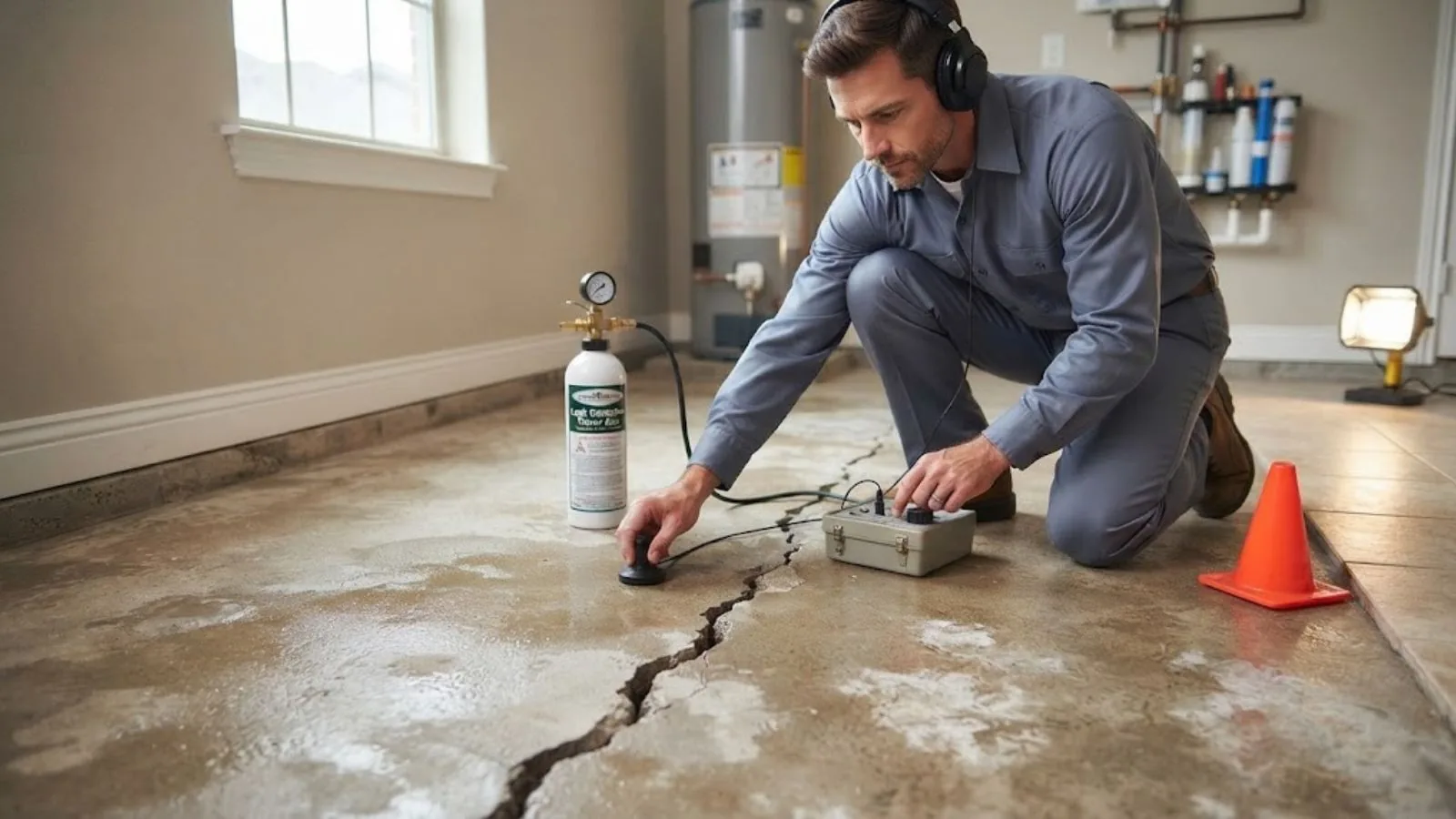
Three ways to fix a slab leak
Each approach trades cost, disruption and long-term reliability differently.
| Option | What it involves | Best when |
|---|---|---|
| Spot repair | Break the slab at the leak, repair the pipe, patch the concrete | One leak and sound pipe elsewhere. |
| Reroute | Abandon the leaking line and run new pipe through walls or attic | Repeated leaks or hard-to-reach pipe. |
| Repipe | Replace most or all supply lines | Old, failing pipe throughout. |
We explain each option with your house in mind. See slab leak repair for the service overview.
Spot repair: what happens
Spot repair is the most direct fix when only one spot has failed.
- Mark the spot.Detection tools set the dig point on the floor.
- Protect the home.Flooring is lifted and dust is controlled.
- Open the slab.A saw cuts a small hole, and the soil is removed to expose the pipe.
- Repair the pipe.The damaged section is cut out and replaced.
- Test and close.The line is pressure tested, then the hole is backfilled and patched.
Floor coverings are not replaced as part of the plumbing work. Plan for flooring repair with a separate trade.
Rerouting around the slab
If the same line has leaked more than once, patching the slab again is poor value. A reroute abandons the buried pipe and brings new pipe up into the attic or inside walls. The slab stays intact, and any future leak is visible and easy to reach.
A reroute opens drywall in several places and means patching afterward. It also changes how water reaches fixtures, so the plumber maps the new path with you before work starts.
Leak found and need a repair plan?
Call us with the detection results or the report you have. We will explain the options for your house.
Call (480) 741-9332When a repipe makes sense
If the pipe itself is wearing out, repairs will keep appearing. Copper with repeated pinholes and old galvanized steel are examples. A repipe addresses the cause and not the symptom.
See repiping to understand materials, timing and the effect on your home. A repipe is a bigger project, but it often ends the cycle of leaks.
Questions that clarify a quote
Ask each contractor these questions and compare the answers.
- How was the leak located, and with what tools?
- What is the plan if more than one leak is found?
- Who patches the concrete and the flooring?
- Is a permit required, and who obtains it?
- What is the warranty on the repair?
- How long will the water be off?
Insurance and your claim
Many policies cover the cost of breaking through the slab to reach a leak when the leak causes sudden damage, but they usually do not pay for the failed pipe itself. Coverage differs a great deal. Call your agent before work begins, keep photographs and ask the plumber for a written report of what was found.
After the repair: what to watch for
A good repair ends with a pressure test, but your own checks add confidence in the weeks that follow.
- Read the meter with the house quiet and confirm it is still.
- Watch the bill over the next two cycles for a return to normal.
- Check the repair area for dampness or a warm spot.
- Keep the plumber's report with your house records.
If the floor was cut, expect the patch to cure for several days before heavy flooring goes back in. Ask the plumber how long to wait.
Why leaks under slabs happen
Pipes under a slab sit in soil that moves a little with moisture and temperature. They rub against rock, concrete and each other. Over time, abrasion and corrosion wear through the pipe wall.
Water chemistry and pressure add to the wear. High pressure strains joints, so a pressure regulator that has failed can shorten pipe life. If you replace a leaking line, ask the plumber to check your pressure and adjust or replace the regulator.
Planning around the repair
Water will be off for part of a day or more. Fill a few jugs, plan meals and move furniture that sits near the work area. Tell the plumber about pets and children so the work area stays safe.
Ask for a clear schedule that lists when the slab will be opened, when pressure testing happens and when the patch is done. A written schedule prevents confusion and helps you coordinate flooring.
Local note: call 811 before any digging
Arizona law requires a call to Arizona 811 before digging. Call 811 or request a locate online. Utility locators have two full working days to respond, and the marks remain valid for 15 working days.
This matters for slab work when the repair involves digging outside the footprint, such as a trench for a new line. Your plumber should confirm the locate has been requested before any exterior excavation.
Slab repair crews travel to Coolidge and San Tan Valley as well.
Source type: Arizona 811 (state one-call notification center). The response and mark periods are stated according to Arizona 811.
Questions readers ask
It depends. Reroutes suit repeated leaks and hard-to-reach pipe. A spot repair suits a single failure in sound pipe.
A spot repair cuts a small section that is patched. A reroute leaves the slab untouched.
Often yes. Check with the building department that covers your address.
Not for work inside the house. Call before any exterior digging.