
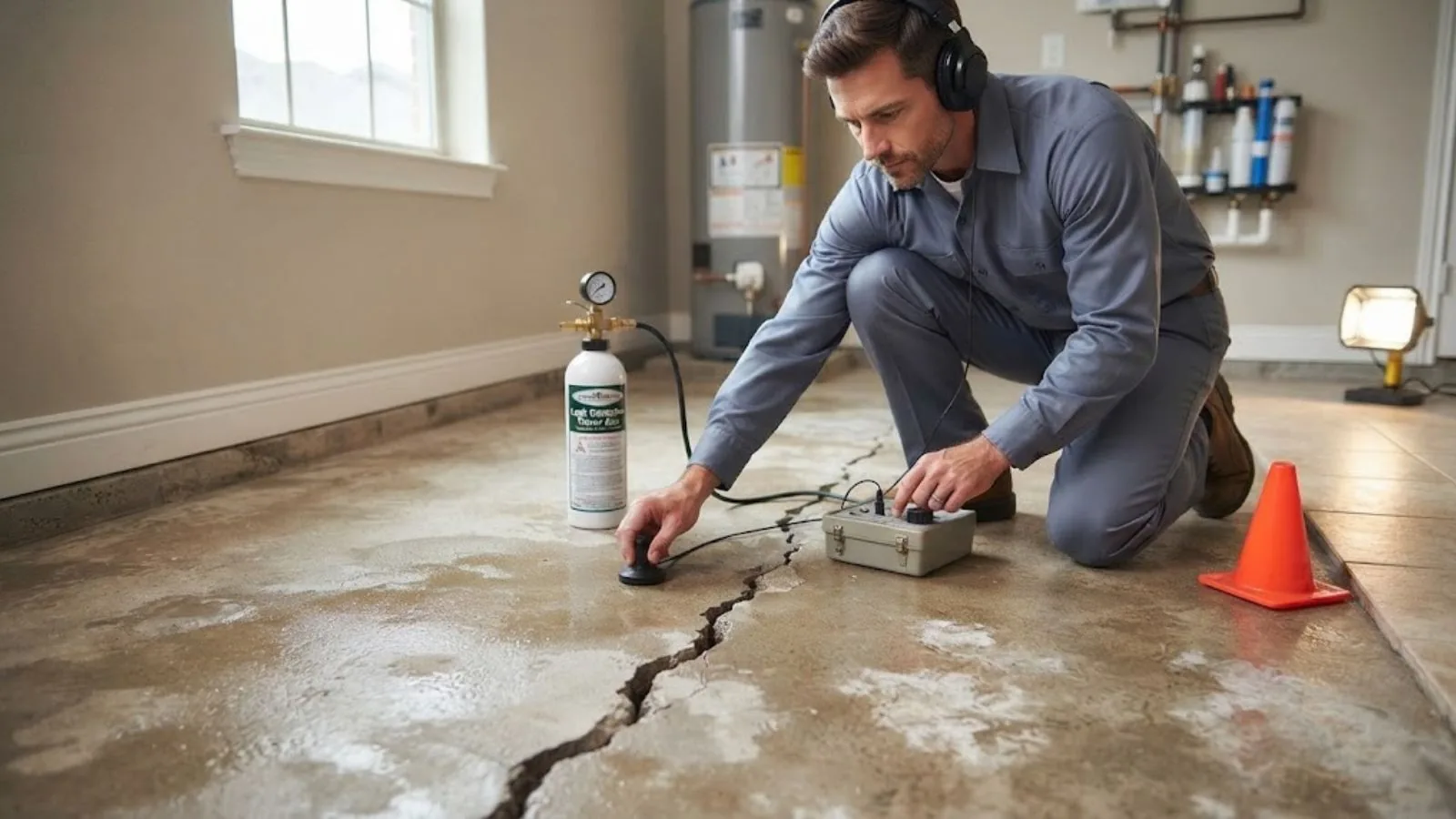
When a slab leak is an emergency
A slab leak wastes water every minute and can undermine the soil beneath the floor. These signs mean act now.
- Water coming up through the floor or along the baseboards.
- A hot spot on tile or concrete that is not near the water heater, which can mean a hot water line leak.
- A hissing or trickling sound in the floor when everything is off.
- A sudden spike in the water bill or a meter that moves with all fixtures off.
What to do while you wait
Close the main water valve and switch off the water heater breaker or gas control so the heater does not run dry.
Move rugs and furniture, keep electronics off wet flooring and photograph the damage for your records.
How slab leaks start
Water lines buried in or under the slab can fail for several reasons. Pipe in constant contact with concrete and soil can corrode or abrade over the years. Movement of the slab can stress joints. High water pressure can add strain.
Pinal County has a particular ground concern. The Arizona Geological Survey explains that heavy groundwater pumping can cause land subsidence and earth fissures, and fissures are documented in Pinal County. Not every slab leak has anything to do with ground movement, but if you see an open crack in the ground near your home, keep people away and report it to the survey and your local emergency management office.
We do not diagnose ground movement. We find and repair the water line, and tell you if the evidence points to something a geotechnical specialist should look at.
Source: Arizona Geological Survey, earth fissures and subsidence.
Water heater leak at the slab edge
A leaking water heater in a garage can send water to the edge of the slab and look like a slab leak. We check the heater connections and the base pan first, because fixing a fitting costs less than breaking into a floor. Details on that fault are on our water heater repair page.
Think you have a slab leak?
Call the 24/7 line. We will help you confirm it and book a detection visit.
Call (480) 741-9332How we locate the leak without breaking the floor first
Finding the exact spot is the most valuable step because it keeps the repair small.
- Isolate the line.We pressure-test hot and cold lines separately to see which one is leaking.
- Listen.Acoustic devices pick up the sound of water escaping from a pressurized pipe.
- Scan for heat.Thermal imaging shows warm patches from a hot water leak.
- Mark.We mark the floor and the pipe path so the repair is a small, accurate opening.
Slab leak repair options
The right repair depends on how many leaks the line has, how old the line is and what is above it.
| Option | What it involves | Best for |
|---|---|---|
| Spot repair | Break into the slab at the leak, replace a short section and patch | One leak in a line that is otherwise sound. |
| Reroute | Abandon the leaking line and run a new one through the walls or attic | Repeated leaks or inaccessible lines. |
| Epoxy pipe coating | Coat the inside of the old line to seal leaks | Some situations where lines are intact, though not suited to every pipe. |
| Repipe | Replace the full supply system | Widespread pipe failure. |
When several leaks appear, we often talk about repiping as the longer-term fix. A buried service line from the meter is covered under water line repair.
Water damage, flooring and your insurance
A slab leak can soak flooring, baseboards and drywall before it is found. We stop the leak and repair the pipe, but drying out and rebuilding flooring is a restoration job.
Policies differ on slab leaks. Many cover resulting water damage but not the pipe itself or the cost of finding the leak. Document everything and ask your agent before work begins.
What slab leak repair costs and what moves the price
You approve a price before demolition starts.
One leak in a good line costs less than several along a failing one.
Tile, wood and stone cost more to open and patch than bare concrete.
Spot repair, reroute and epoxy each use different time and materials.
Furniture, cabinets and built-ins add labor.
Hard-to-find leaks take longer to pinpoint.
Want your real number? Call (480) 741-9332 and describe the signs you see.
Code note: testing and permits
The UPC and IPC call for testing repaired water piping before it is concealed. Slab work often needs a permit, so ask the building department that covers your address, and expect an inspection of the repair or reroute.
Slab leak repair for Florence homes
Slab-on-grade construction is common across the desert Southwest, though not every Florence house is built the same way. If you are not sure what yours sits on, tell us and we will confirm on site. We serve homes in town, at Anthem at Merrill Ranch and along Hunt Highway, and dispatch also covers Coolidge and San Tan Valley.
Questions about slab leak repair in Florence
Yes. Dispatch is open 24/7. If water is coming through the floor, close the main valve and call. We book the earliest available visit.
The usual clues are warm floor spots, the sound of running water with everything off, a damp slab edge or an unexplained rise in the bill. Detection confirms it.
We try to keep it small. Detection narrows the leak to an area of a few inches, so the opening is small. Rerouting through walls or the attic avoids the floor altogether.
Policies differ. Many cover damage caused by a sudden leak but not the repair of the pipe itself. Read your policy and ask your agent.
Sometimes. Rerouting or lining may avoid breaking the slab. The right choice depends on the pipe and the number of leaks.
Tell the landlord or property manager right away, and have them call us if they need a visit arranged. We note access and tenant contact before we arrive.