
When a water leak is an emergency
Hidden leaks do not announce themselves. Some of these signs mean the leak is active and spreading.
- Water stains growing on a ceiling or wall, or a bubbling spot on paint.
- The sound of running water when everything in the house is off.
- A warm patch on a floor that should be cool, a possible hot water line leak.
- Mold smell, damp carpet or baseboards that keep swelling.
What to do while you wait
Close the main water valve, usually near the hose bib or inside the garage, then open one tap to relieve pressure.
Move furniture and electronics out of the wet area. Do not touch outlets or switches near water, and turn off the breaker for that room if the panel is dry and safe to reach.
The meter still moves with every tap off
Many leak calls start with a number on a water bill that makes no sense. The simplest test needs no tools.
- Turn off every fixture.Check that no toilet is running, the ice maker is idle and the irrigation is paused.
- Read the meter.Write down the reading or note the position of the small leak indicator dial.
- Wait two hours without using water.The EPA recommends this window in its Fix a Leak Week guidance.
- Read it again.If the number moved at all, water is going somewhere. The EPA says you probably have a leak.
Next, close the main valve at the house and check the meter again. If it stops, the leak is inside the house. If it keeps moving, the leak is on the underground service line between the meter and the home, which is covered under water line repair.
Source: EPA WaterSense, Fix a Leak Week.
High water bill: leaks, toilets and irrigation
The EPA reports that the average household loses more than 9,300 gallons a year to leaks, and nine percent of homes leak 50 gallons or more per day. A toilet flapper that does not seal is the most common culprit. A dye test finds it in ten minutes.
Add a few drops of food coloring to the toilet tank and wait. If color shows in the bowl without flushing, the flapper is leaking. A faucet dripping once per second wastes more than 3,000 gallons a year according to the same EPA page.
If the toilets and faucets are fine and the meter still turns, the leak is in a supply line, a water heater connection, an irrigation line or the service line. That is when a leak detection visit pays for itself.
Source: EPA WaterSense.
How we find a hidden leak
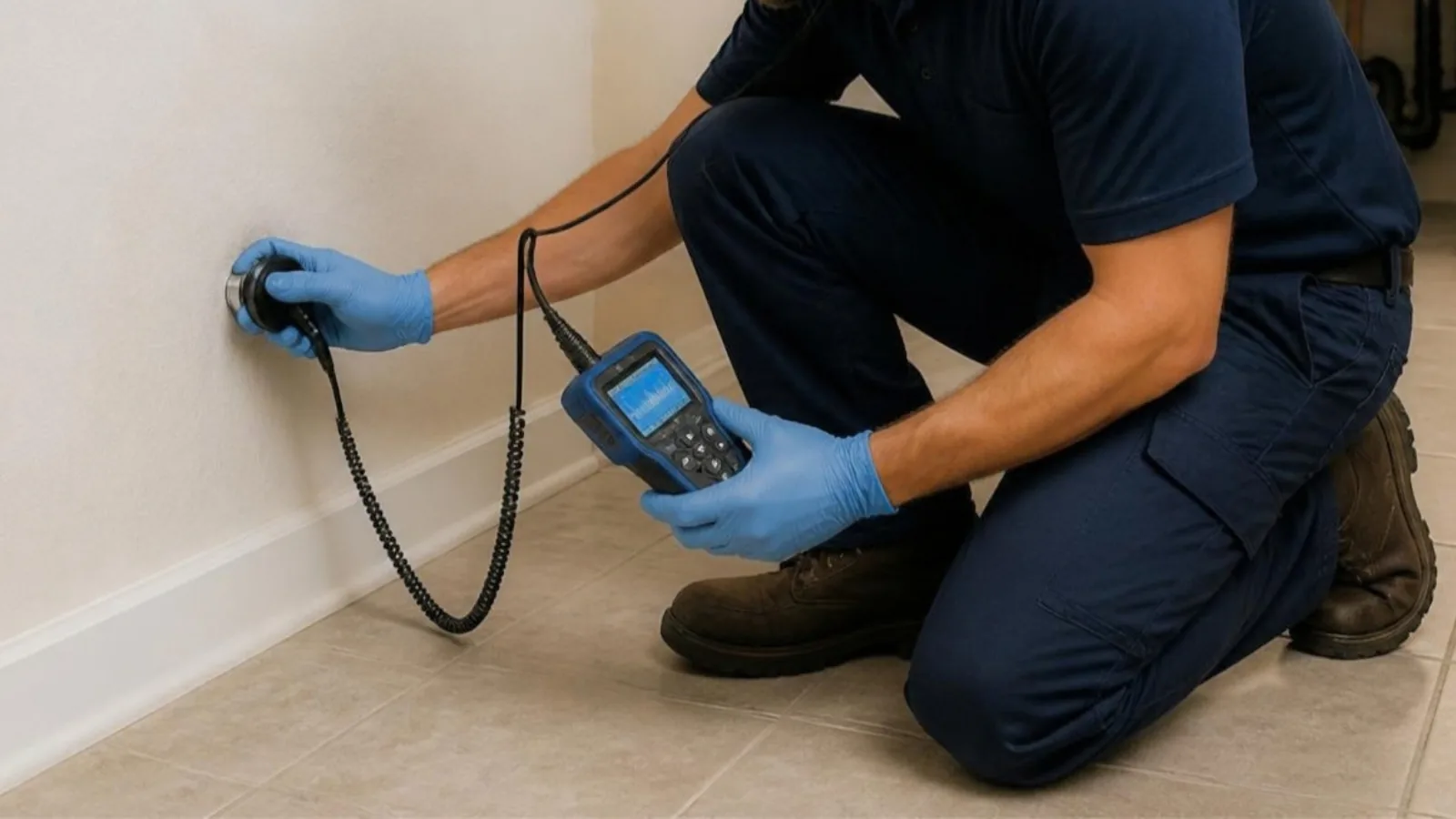
Finding a leak means narrowing it down before touching a wall. Our crews use a sequence of tests that start with the least invasive.
- Pressure testing isolates whether the leak is on a hot line, a cold line or the service line.
- Acoustic listening devices pick up the sound of pressurized water escaping through a pipe.
- Thermal imaging shows temperature differences from a hot line leak or wet insulation.
- Moisture meters map how far dampness has spread through drywall or flooring.
- A drain camera checks whether a drain line is the source and not a supply line.
Think there is a hidden leak?
Call the 24/7 line. We will help you confirm it with the meter test and book a visit.
Call (480) 741-9332Ceiling, wall and attic leaks
A stain on a ceiling is rarely directly under its source. Water travels along framing before it drips. We trace stains back, check bathroom fixtures above, and test supply and drain lines in the wall.
Sometimes the culprit is not plumbing. A cracked roof boot, a clogged air conditioner condensate line or a window leak can look just like a plumbing leak. Telling those apart before cutting drywall saves money.
Under-house, slab and buried line leaks
Many Florence homes are built on slabs, and the supply lines that serve them are often buried in or under the concrete. A leak there shows up as a warm floor spot, a sudden rise in the bill or a damp edge of the slab.
When detection confirms a leak below the slab, the repair options are covered on our slab leak repair page. Water leaking beneath a home can also soften soil, and the Arizona Geological Survey notes that earth fissures exist in Pinal County and that water running into a fissure can widen it. If you see an open crack in the ground near a leak, keep people away from it and report it.
Yard and meter-box leaks, irrigation line breaks and sprinkler valve leaks are checked on the same visit when they are on the property.
Source: Arizona Geological Survey, earth fissures and subsidence.
What leak detection costs and what moves the price
Pricing depends on how hard the leak is to isolate. You hear the number before work begins.
A fixture supply line is quick. A buried service line takes more tools and time.
Simple pressure and acoustic tests cost less than a full thermal and camera survey.
Open crawl space and utility rooms are easier than finished walls and tile.
Commercial buildings with several systems take longer than a single home.
The repair is priced separately once we know what it is.
Want your real number? Call (480) 741-9332 and describe what you see or what the meter is doing.
Code note: pressure testing
Model plumbing codes such as the UPC and IPC call for pressure testing of new water piping before it is covered. We use the same idea on existing lines, holding pressure and watching for a drop, to confirm a leak before we open anything.
Leak detection for Florence homes and small businesses
We work in town, in the Townsite Historic District, along Hunt Highway and at Anthem at Merrill Ranch, and dispatch also covers Coolidge and San Tan Valley.
Property managers can call for multi-unit and commercial buildings. Pool and spa leaks are a small share of the calls we hear, so say what you have when you call and we will tell you plainly whether we handle it.
Questions about leak detection in Florence
Yes. Dispatch is open 24/7. If water is actively coming through a ceiling or you cannot stop a leak, call right away, close the main valve and we will book the earliest visit.
A water bill that rises with no change in use, a meter that moves with everything off, a warm floor spot, or a musty smell are the usual clues. The two-hour meter test confirms it.
We try not to. Detection narrows the leak to a small area first, so any opening is as small as possible. Sometimes the leak is reachable through an access panel or a crawl space.
Yes. Acoustic and thermal tools can locate a leak in or under a slab without breaking it first. The repair options are described on our slab leak repair page.
Irrigation lines and meter-box leaks on the property are included. Pool and spa leaks are a smaller part of the work. Tell us what you have when you call.
Yes. Tell us the property type and tenant contact when you call. Commercial leak detection is described in more detail on our commercial plumbing page.